
Confidentiality, Evidence, and Wrongful Termination in Ontario: What Employees Should Know Before They Hit Record
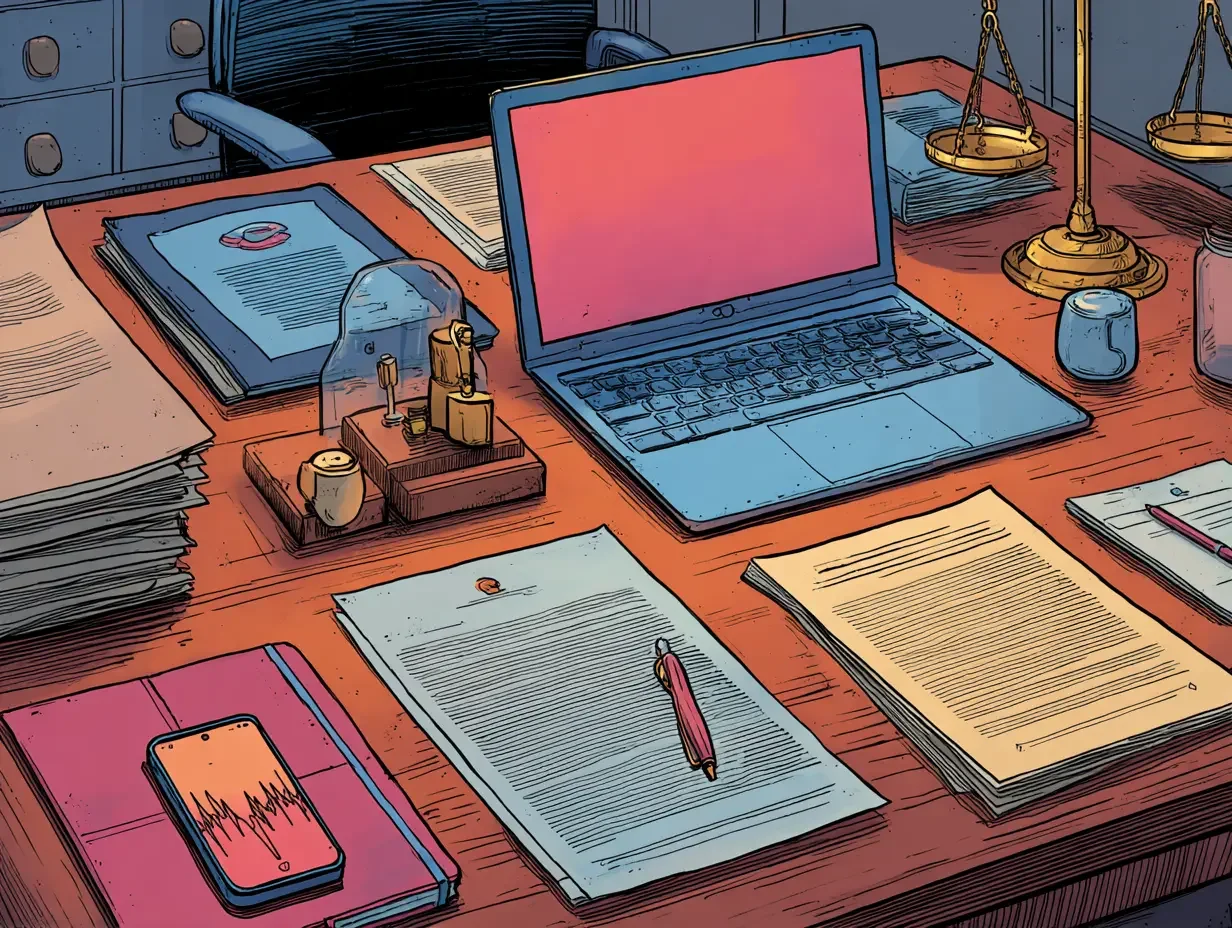
When someone is terminated, the first instinct is often to protect themselves: save emails, screenshot messages, record the termination meeting, download performance records, or keep a copy of work they created. That instinct is understandable. In wrongful dismissal, constructive dismissal, discrimination, reprisal, harassment, or unpaid compensation disputes, evidence matters.
But not all evidence-gathering is risk-free.
In Ontario employment disputes, there is a major difference between preserving relevant information and taking confidential business records, private employee information, customer data, source code, or intellectual property that belongs to the employer. A screenshot or recording may help prove what happened. It may also create a new confidentiality, privacy, or just-cause issue that overshadows the original termination claim.
At Vanguard Law, we regularly advise employees and employers on termination strategy, workplace disputes, confidentiality obligations, and employment contracts. One recurring question is: what can an employee keep, record, or use after a termination?
The answer is: it depends on what the information is, how it was obtained, why it was preserved, and whether there was a less intrusive way to prove the same point.
Confidentiality does not end when employment ends
Employees generally owe duties of loyalty, good faith, and confidentiality during employment. Certain confidentiality obligations can continue after employment ends, especially for trade secrets, proprietary business information, customer lists, pricing, financial data, product plans, source code, internal strategy documents, and other information that is not publicly available.
This matters in a wrongful dismissal claim because a former employee may believe, “I need these documents to prove my case.” Sometimes that may be true. But if the employee takes more than is necessary, copies sensitive information unrelated to the dispute, forwards confidential documents to a personal email, or keeps employer data after being asked to return it, the employer may argue that the employee breached confidentiality obligations.
In some cases, an employer may even raise “after-acquired cause,” meaning the employer learns after termination about conduct it says would have justified dismissal for cause.
Screenshots and downloads: evidence or breach?
Screenshots are common in employment disputes. Employees may screenshot Teams or Slack messages, text messages, schedules, commission statements, workplace announcements, disciplinary notes, performance reviews, or documents showing unpaid wages or promised compensation.
The key question is not simply whether the screenshot is helpful. The key question is whether the employee had a legitimate reason to preserve it and whether the screenshot captured only what was reasonably necessary.
There is a significant difference between saving a screenshot of a message in which a manager confirms a commission promise and downloading a customer database, payroll spreadsheet, private HR file, source code repository, pricing model, or confidential business plan.
Employees should be especially careful with documents containing third-party information, including customer data, medical information, SINs, banking information, other employees’ compensation, internal investigations, privileged legal communications, or proprietary business records.
A practical rule: preserve the minimum necessary information, avoid taking unrelated confidential records, and get legal advice early. In many termination cases, relevant documents can be requested through counsel or produced in litigation. Employees do not need to engage in “self-help discovery” by copying broad categories of employer files.
If you have been dismissed and are deciding whether to sign a release, accept an offer, or preserve evidence, a severance package review can help you assess the legal and strategic risks before taking action.
Secret recordings at work: legal does not always mean advisable
Many employees ask whether they can secretly record a workplace conversation. In Canada, the Criminal Code generally prohibits intercepting private communications, but it contains an exception where there is consent from the originator of the communication or from the person intended to receive it. In practical terms, this is often described as “one-party consent.”
That does not mean secret recording is always a good idea.
Employment relationships are built on trust. Secretly recording supervisors, HR personnel, co-workers, clients, or workplace meetings may be viewed as dishonest, underhanded, or contrary to privacy and confidentiality expectations. Courts have recognized that surreptitious workplace recordings can damage the trust relationship between employer and employee. For example, in Shalagin v. Mercer Celgar Limited Partnership, 2023 BCCA 373, the British Columbia Court of Appeal upheld a decision involving after-acquired cause where the employee had secretly recorded numerous workplace conversations.
This risk is particularly serious where the employee records many conversations, records people discussing private matters, records conversations unrelated to the employee’s legal issue, records co-workers who did not know they were being recorded, or records in violation of workplace policies.
That said, context matters. A targeted recording may be different from a broad practice of recording everyone at work. A recording made to preserve evidence of discrimination, harassment, threats, retaliation, or a key termination discussion may be assessed differently from routine secret recording of ordinary workplace conversations. But because the consequences can be significant, employees should get legal advice before recording where possible.
IP and work product: “I created it” does not always mean “I own it”
Wrongful dismissal disputes can also raise intellectual property issues. Employees sometimes keep copies of work they created to show the quality of their work, build a portfolio, prove commissions, or defend against allegations of poor performance. This can be risky.
For copyright-protected work created in the course of employment, the Copyright Act provides that the employer is generally the first owner unless there is an agreement to the contrary. For inventions, patents, industrial designs, confidential processes, software, and other technical work, ownership may depend on employment agreements, IP assignment clauses, job duties, whether the employee was hired to invent or develop, and whether the work was created using employer resources.
The Canadian Intellectual Property Office also recommends that businesses clearly document IP ownership in employment, contractor, and partnership agreements, including invention assignment clauses, copyright ownership terms, moral rights waivers, and confidentiality protections for trade secrets. See CIPO’s guidance on how to prove who owns new ideas and creations.
Even where an employee contributed skill and creativity, the employee may not have the right to keep, reuse, publish, or transfer the work after termination. This is especially important in technology, marketing, engineering, design, sales, professional services, and executive roles.
Employees should avoid taking employer code, design files, pitch decks, client lists, confidential templates, business plans, or proprietary documents for personal use. If examples of work are needed for a portfolio or future employment, the safer approach is to use public-facing materials or seek written permission.
Confidentiality clauses and termination clauses can interact
Employers also need to be careful. Confidentiality obligations are legitimate and often necessary, but they should be drafted clearly and proportionately. Overbroad clauses that suggest any breach of confidentiality automatically results in termination without notice or pay can create problems, especially if the language conflicts with minimum standards under Ontario’s Employment Standards Act, 2000.
Ontario employment contracts are closely scrutinized. Employers should not assume that a broad “cause” clause, confidentiality clause, conflict-of-interest clause, or misconduct clause will automatically disentitle an employee to statutory or common law entitlements.
For employers, the better approach is to have clear confidentiality, privacy, recording, data-use, electronic monitoring, return-of-property, and IP policies. Those policies should be consistent with the employment agreement, communicated before problems arise, and enforced consistently.
Vanguard Law assists employers with employment contracts, workplace policies, termination planning, and ongoing employment-law support through Workplace Counsel+™.
What employees should do after a termination
After a termination, employees should act carefully and strategically. Before copying files or recording conversations, consider these steps:
Save personal documents, such as your employment agreement, offer letter, pay stubs, T4s, ROEs, benefit documents, bonus plans, commission plans, performance reviews, and termination letter.
Write a detailed chronology from memory, including names, dates, meetings, promises, complaints, discipline, accommodation requests, and termination discussions.
Preserve relevant messages or documents only where you have lawful access and only to the extent necessary.
Do not access employer systems after termination unless expressly authorized.
Do not delete, alter, rename, or manipulate documents.
Do not forward broad folders, confidential databases, source code, customer lists, employee files, or privileged communications to yourself.
Speak with an employment lawyer before using recordings, screenshots, or confidential documents in a demand letter, litigation, or negotiations.
What employers should do
Employers should also take proactive steps. At termination, employers should disable access promptly, preserve potentially relevant evidence, retrieve company devices, remind employees of confidentiality and return-of-property obligations, and avoid inflammatory allegations unless they are supported by evidence.
Employers should also ensure that policies are not just sitting in a handbook. If the organization wants to prohibit secret recordings, restrict screenshots, control use of confidential documents, or protect IP, those expectations should be clear, accessible, consistently enforced, and legally reviewed.
Where a workplace complaint, investigation, or misconduct concern is involved, employers may also need advice on whether a formal internal or external process is required. Vanguard Law advises on workplace investigations and employer-side risk management.
The bottom line
Evidence matters in wrongful dismissal cases. But how that evidence is gathered matters too.
For employees, the goal is to preserve what is necessary without creating a new allegation of misconduct. For employers, the goal is to protect confidential information and IP without overreaching or relying on unenforceable contract language.
A wrongful termination dispute is stressful enough. Before taking screenshots, downloading documents, recording conversations, or using workplace materials after termination, get legal advice. The right strategy can preserve the evidence you need while reducing the risk of turning a strong case into a complicated one.
Need advice about a termination, severance package, workplace recording, confidentiality issue, or employee IP concern? Contact Vanguard Law to discuss your options.