What can your Ontario employer tell you to wear?
People call us all the time with versions of the same story:
“My employer says I can’t wear my hijab.” “They told me to shave my beard for ‘professionalism.’” “They want me to cover my tattoos.” What’s actually legal?
Here’s the straight answer for Ontario.
The bottom line
Employers can have dress codes and appearance rules. But those rules cannot discriminate under Ontario’s Human Rights Code and, where they do create barriers tied to a protected ground (like religion/creed, sex, gender identity or expression, race, disability), employers must accommodate to the point of undue hardship.
“Undue hardship” in Ontario is a high bar and is assessed on only three factors: cost, outside sources of funding, and health & safety—not customer preference or employee morale.
When a rule is challenged as discriminatory, decision-makers also ask whether it’s a bona fide occupational requirement (BFOR) under the Supreme Court of Canada’s Meiorin test (rationally connected to the job, adopted in good faith, and reasonably necessary).
Religious clothing & head coverings (hijabs, turbans, kippahs, niqabs)
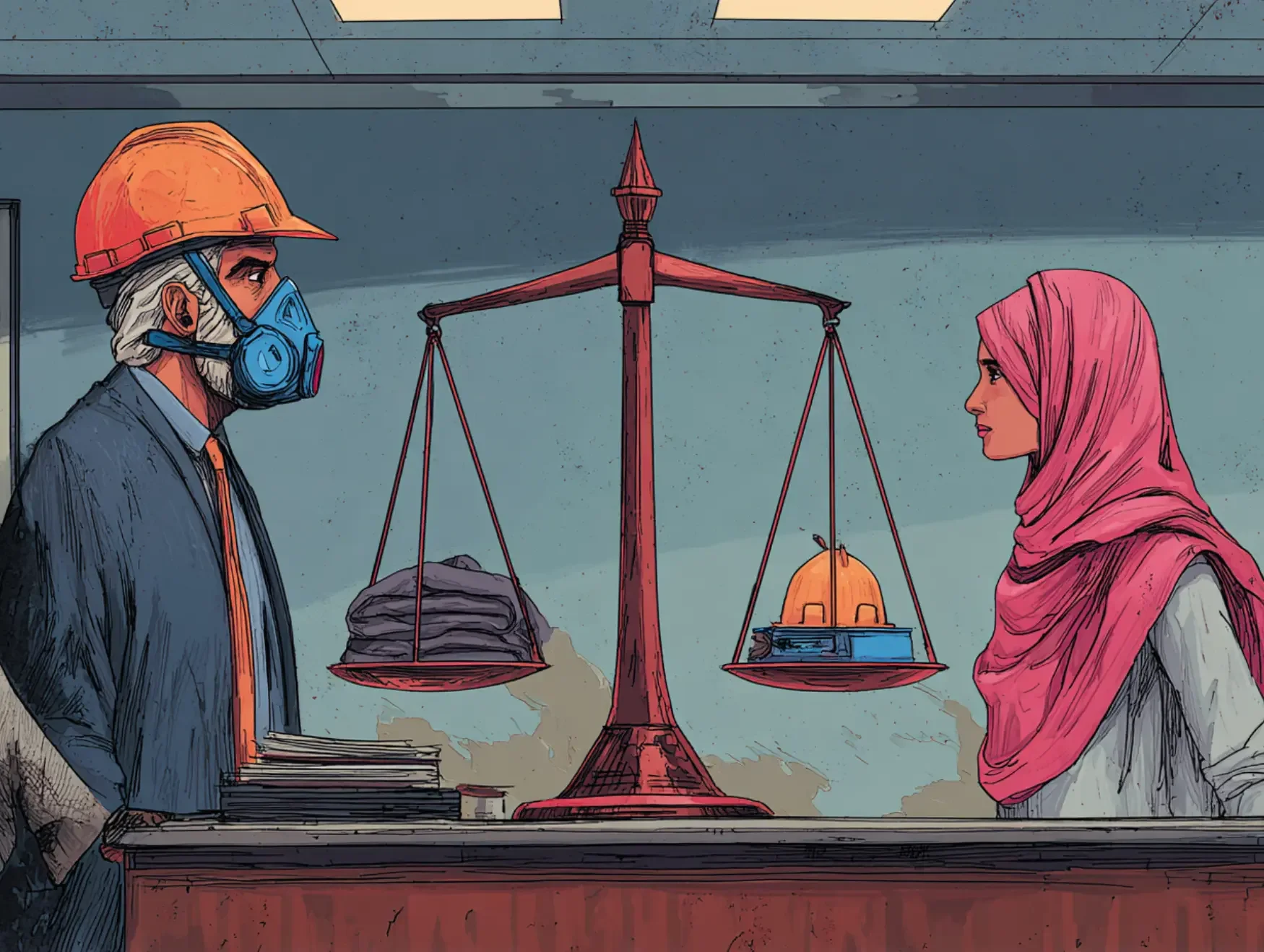
Policies like “no headwear” or “no religious symbols” usually trigger a duty to accommodate because they adversely affect people based on creed. Typical accommodations include allowing a hijab or turban that meets colour/branding or safety needs. Customer preference is not a defence.
Safety caveat: If there’s a real health & safety issue, that can ground undue hardship—but employers must explore alternatives first (e.g., modified gear, different tasks) before saying “no.”
Beards: appearance vs. safety
Appearance-only rules (“we prefer clean-shaven for our image”) generally cannot justify infringing creed, gender expression, or disability rights. Employers need something stronger than “brand image.”
Safety rules tied to respirators are different. Ontario guidance and standards prohibit using tight-fitting respirators where facial hair breaks the seal; in such settings, a “clean-shave where a tight seal is required” rule is typically legitimate. Employers should still consider alternatives (e.g., loose-fitting PAPRs) where feasible.
Gendered or sexualized dress codes (heels, makeup, “feminine” uniforms)
Ontario’s Human Rights Commission is clear: you can’t require women or gender-diverse employees to dress in a sexualized or gender-specific way (e.g., mandatory heels, short skirts, makeup), or impose stricter standards on one gender. These policies are widely found to be discriminatory. Use gender-inclusive options instead.
Hair, protective styles & grooming
Dress codes must accommodate a range of hairstyles and avoid rules that adversely affect people based on gender expression or race (for example, rules that target natural hair or protective styles). Where safety truly requires it (e.g., machinery or contamination risks), use the least-restrictive measure (like hair nets) that addresses the risk.
Tattoos & piercings
“Tattoos” and “piercings” are not listed grounds in the Human Rights Code. That means an employer can usually require covering tattoos or limit piercings as part of a neutral dress policy—so long as the rule isn’t discriminatory in how it’s applied (for example, sexualizing women or enforcing it unevenly). If a tattoo or piercing is linked to a creed or cultural/racial identity, human rights protections may be engaged and accommodation may be required.
(As a practical note, some arbitrators have struck down blanket bans on large tattoos/piercings where employers had no evidence of any real risk or business need—another reminder to tailor policies to legitimate objectives.)
Political clothing, buttons and slogans
Ontario’s Code does not list political belief as a protected ground in employment. Employers can set content-neutral rules about political signage or apparel (especially for client-facing roles), provided those rules are applied consistently and don’t indirectly target protected groups.
How to tell if a dress code passes legal muster (quick triage)
Ask these five questions:
Is the rule neutral and job-related? If it singles out sex, race, creed, disability, etc., red flag.
Does it create an adverse effect on anyone tied to a protected ground (e.g., “no headwear” for hijab/turban; “heels required” for women)? If yes, accommodate unless undue hardship.
Have you considered accommodations (alternative garments, colours, modifications, scheduling, reassignment) and documented why some won’t work?
Is “health & safety” real and evidence-based? If respirator fit or machine-safety is involved, be precise; cite the regulation/standard and explore the least-restrictive fix.
Are you avoiding invalid reasons like customer preference or vague “brand image” as the basis for refusing accommodation?
A policy skeleton you can adapt
Purpose: Professional, safe, inclusive presentation tied to bona fide job needs.
Options, not prescriptions: Provide multiple uniform/grooming options any employee may choose (not gendered). Allow religious head coverings with brand-appropriate colours/logos.
Accommodation clause: We accommodate Code-related needs (creed, disability, gender identity/expression, etc.) to the point of undue hardship (cost, outside funding, health & safety). Include a simple request process.
Safety: Where tight-fitting respirators or other PPE are required, workers must comply with safety standards; we will explore reasonable alternatives where feasible.
No sexualized standards: Prohibit requirements that sexualize or impose more onerous standards on any gender.
For an easy employer checklist, the OHRC has a concise dress-code checklist you can mirror.
If you’re an employee
Flag the issue early and explain how the rule affects your Code-related need (e.g., creed, disability).
Propose options (e.g., branded hijab, alternative fastener, neutral-colour garment).
Co-operate in the process and provide info your employer reasonably needs (e.g., functional medical info for disability).
If you’re an employer
Write narrowly to real, demonstrable needs and keep documentation.
Train managers to handle accommodation requests consistently.
Audit for hidden bias (e.g., gender-specific requirements, rules that hit racialized or religious employees harder).
Need help?
Whether you’re navigating hijabs and PPE, clean-shave rules, or a “no visible tattoos” policy, we help Ontario employers and employees get this right. Reach out to Vanguard Law for tailored advice on your policy or situation.
This post is general information, not legal advice. If you’re federally regulated or outside Ontario, different human rights rules may apply.